
Should you care that a slot machine maker changed its logo? If you only ever press spin, honestly, not much — a visual refresh doesn’t touch a single reel. But if you follow who builds the cabinets, the systems and the payment rails behind the casino floor, the IGT brand reveal at G2E 2026 is worth a few minutes of your time. It tells you where one of the biggest suppliers in gaming thinks the business is heading.
What exactly did IGT reveal at G2E 2026?
International Game Technology used the 2026 edition of the Global Gaming Expo in Las Vegas to present a new brand identity. The company describes it as built on three principles — fluid, frictionless and magnetic — tied to a single promise: an experience designed around the player and built for operators.
In IGT’s own framing, this is a deliberate step away from a traditional corporate image toward a bolder, more modern look that represents the next chapter in the company’s evolution. The reveal was anchored at the company’s G2E presence at booth 4455, where the new identity sat alongside the product it’s meant to describe.
Four commitments sit at the centre of the refresh, and they’re worth reading as a statement of strategy rather than decoration:
- Integrated solutions across the whole casino floor
- High-demand games — titles players actually want to come back to
- Expertise in action, meaning a proven track record and practical advantage
- Commitment to customer success: when you grow, we grow
Alongside the launch, IGT’s digital team put it more plainly on LinkedIn: “We’re evolving. We’re building around a simple idea: when games, systems, payments, and insights work together, a magnetic gaming experience is unlocked.” The same post talks about bringing decades of work together to create a more seamless journey across the floor and online. You can see the company’s own materials on the IGT website.
What do “fluid, frictionless and magnetic” actually mean?
Fair question, because those three words could be attached to almost anything. Translated out of brand-speak, they point at a specific business model: one supplier providing the games, the casino management systems, the cashless and payment layer, and the data that connects them, so an operator isn’t stitching four vendors together.
“Frictionless” is the part with the clearest real-world meaning. Friction in a casino is the queue at the cage, the cash-out ticket you have to walk somewhere to redeem, the account you have to re-register for online. “Magnetic” is the softer half — it’s about games and floor layouts people choose to return to. “Fluid” covers the handover between the physical floor and the online product.
Here’s how the stated commitments map onto what they’d look like in practice:
| What IGT says | What it points to on the floor |
|---|---|
| Integrated solutions | Games, floor systems, payments and reporting sourced from one supplier rather than assembled from several |
| High-demand games | Recognisable, licensed and long-running titles that hold their spot on the bank instead of being rotated out |
| Expertise in action | Installed-base scale and regulatory experience used as a selling point against newer entrants |
| Customer success | Commercial models tied to operator performance, not just one-off hardware sales |
Why launch a rebrand at G2E rather than by press release?
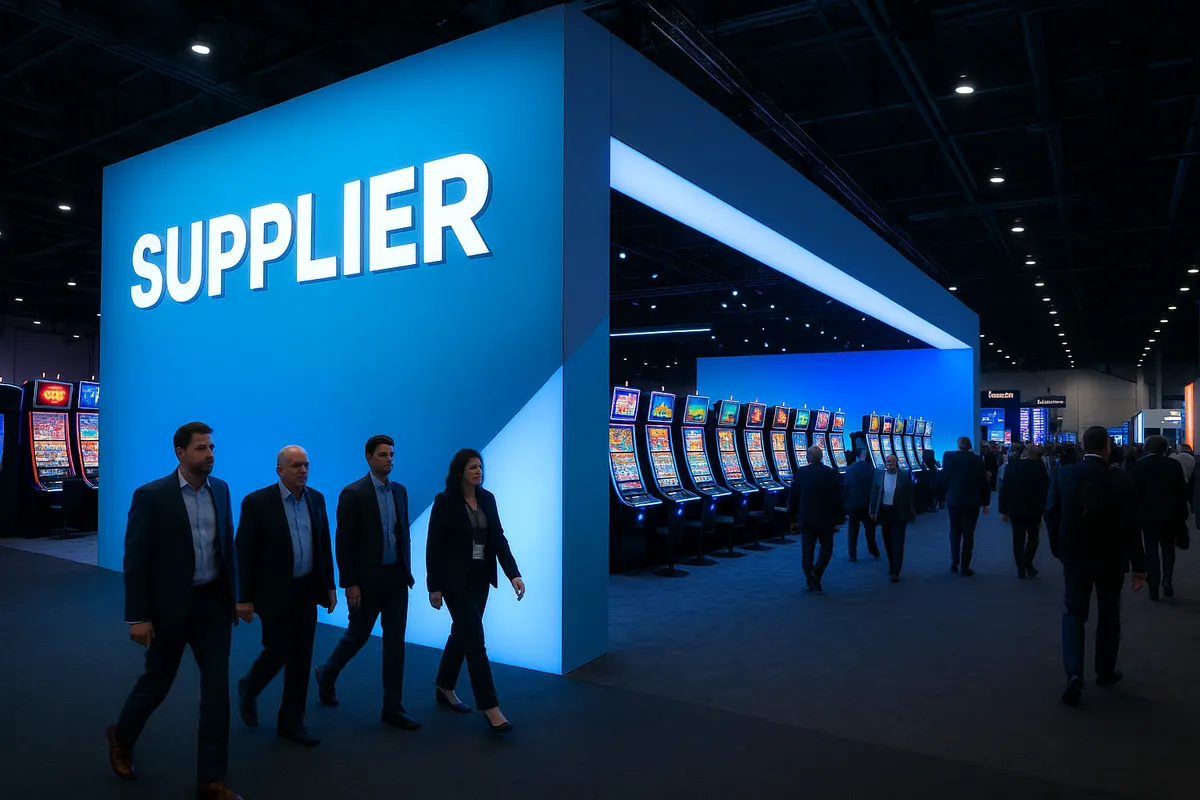
Because G2E Las Vegas is where the buyers are. The show is the industry’s main annual meeting point in North America, and the people walking the aisles are the slot directors, procurement teams, systems managers and regulators who sign the deals. A brand identity revealed on a show floor gets seen in context — on the booth, on cabinet surrounds, on the signage above the systems demos — instead of landing in an inbox.
There’s a competitive logic too. Every major supplier is fighting for attention in the same week, so a refreshed look is as much about standing out in a crowded hall as it is about long-term positioning. And a trade show gives a company one thing a press release can’t: immediate reaction from the customers whose opinion decides whether the repositioning sticks.
It also helps that this reveal lands at a moment of consolidation among gaming suppliers. The accompanying artwork for the announcement was tagged as an IGT-Everi brand identity, a reminder that the businesses now sitting under the IGT name are broader than the slot cabinet the brand was built on.
Does any of this change the games themselves?
No, and that’s the honest answer a lot of coverage skips. A brand identity is typography, colour, tone of voice and positioning. It doesn’t alter a game’s RTP, its volatility, its hit frequency or the certified RNG behind each outcome. If a machine returned 92% before the logo changed, it returns 92% after. The house edge is set by the game’s maths and the operator’s configuration, approved by the relevant regulator — not by marketing.
What a rebrand can change over time is what gets built and what gets sold. If a supplier commits publicly to integrated systems, cashless payments and a joined-up land-based and online account, that’s where its development money tends to go. Players feel that in the plumbing: faster cash-out, a single wallet, loyalty that recognises you on the floor and in the app. Those are real improvements, but they’re convenience improvements. They don’t shift the maths in your favour.
Why do gaming suppliers keep rebranding anyway?
Because the job description changed. Companies that spent decades known as slot machine makers now sell systems, payments, sports betting content, loyalty platforms and online games. A brand built around reels and cabinets undersells that, and operators increasingly buy bundles rather than boxes.
Mergers force the issue as well. When two sizeable portfolios combine, you end up with overlapping logos, product names and sales messages, and customers get confused about who they’re actually buying from. Gaming supplier branding is, at that point, a practical cleanup job as much as a creative one.
The risk is equally obvious. A refresh that isn’t backed by product is just new paint, and this audience is unusually good at spotting the difference. Operators will judge the IGT rebrand on whether the integration story shows up in installations, not on how good the booth looked.
What’s worth watching next
Three concrete things. First, how quickly the new identity reaches hardware and systems screens rather than just marketing material — that’s the cheapest tell of how serious the change is. Second, whether product announcements over the coming year genuinely cross categories, pairing games with systems and payments in the same deal. Third, how rival suppliers respond at the next round of trade shows, because one visible repositioning in Las Vegas usually triggers a few more.
For players, the practical takeaway is smaller but useful: judge a game on its published RTP, its volatility and the operator’s terms, not on the name above the door. And whatever brand is on the cabinet, use the deposit, loss and session limits your operator offers — those tools do more for your bankroll than any supplier’s promise of a magnetic experience.