

94% of revenue comes from one screen
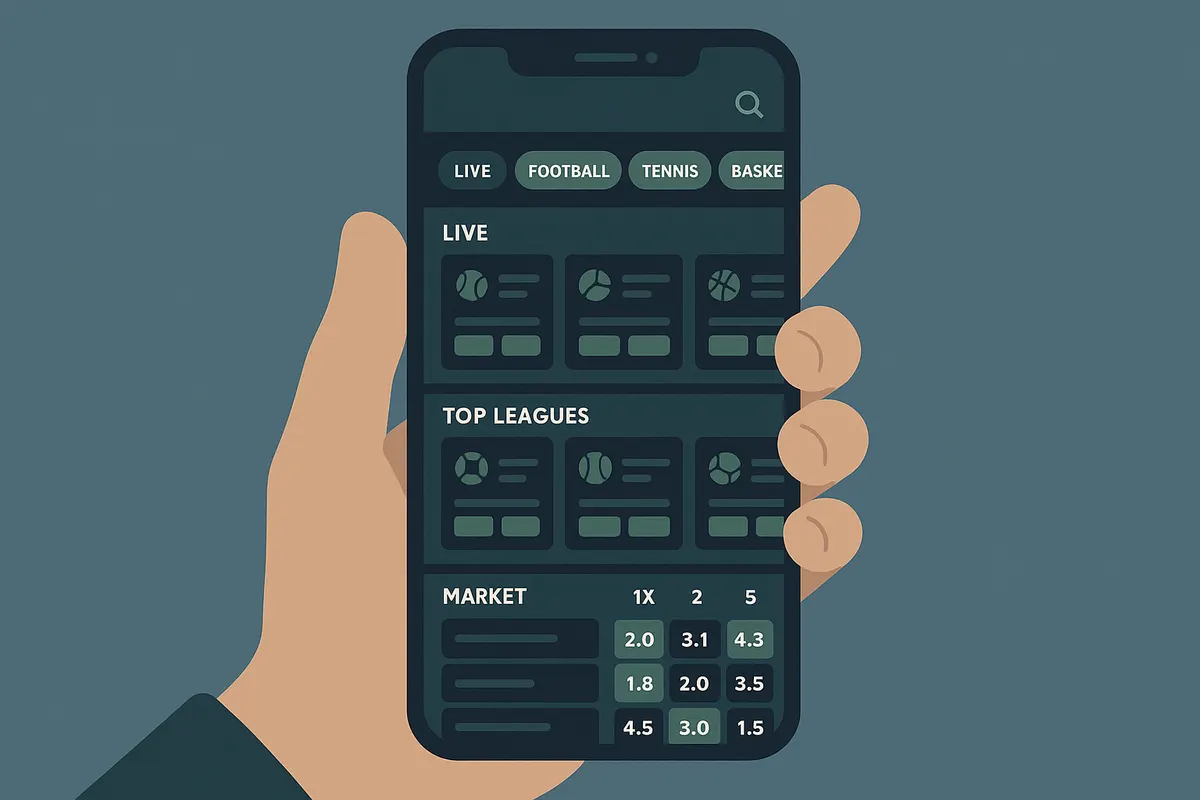
Across operators running the SOFTSWISS Sportsbook platform, mobile devices generate 94% of gross gaming revenue and 89% of turnover. Not a majority. Not “most”. Ninety-four percent. That single figure explains why softswiss sportsbook mobile development has stopped being a side project and become the product, and why the company’s newly redesigned mobile layout, shown at SBC Summit Lisbon from 29 September to 1 October 2026 at stand C422, deserves more than a press-release skim.
For context, Coherent Market Insights expects mobile to account for 58.3% of the global online sports betting market in 2026. SOFTSWISS operators are running far ahead of that industry average, which makes their mobile data a useful early signal of where everyone else is heading.
Here’s the thing most coverage of a redesign misses: a layout change is not cosmetic. It decides what you see first, how many taps stand between you and a confirmed bet, and which markets get the prime real estate. Learning to read those decisions is a genuinely useful skill. So let’s go through what changed, what the numbers imply, and then a practical process for auditing any betting app you use.
What the redesigned mobile sportsbook layout changes
SOFTSWISS frames the update around three friction points. Stripped of the marketing language, they come down to scrolling, filtering, and bet assembly.
| Change | What it does | What it means on your screen |
|---|---|---|
| Streamlined content discovery | Dynamic horizontal carousels for Live, Prematch and Top Leagues | Less vertical scrolling; you swipe sideways through curated rows instead of thumbing down a long list |
| Unified filtering | A filter applied to a league or event updates all relevant sections at once | You set a filter once rather than re-applying it in every block of the page |
| Faster bet building | A “Show top markets” view that surfaces popular markets in one place | Fewer taps to reach common selections and to stack legs into an accumulator |
Alexander Kamenetskyi, Head of Operations at SOFTSWISS Sportsbook, is refreshingly blunt about the commercial logic: “Mobile is where operators convert traffic into GGR, so reducing friction across the betting journey is an important commercial focus.” That is the honest version of what every UX redesign in this sector is for. Fewer interactions between intent and confirmed bet.
The other half of the release is aimed at operators rather than players. The layout is controlled through the CMS, so a sportsbook can switch it on, configure which sections and carousel items appear, and roll back to the previous version without integration downtime or developer time. Translated: the app you opened last week and the app you open tonight can be structurally different, and nobody has to ship an update to the store for that to happen.
Read the gap between 94% and 89%
The detail worth sitting with is the five-point spread. Mobile produces 94% of GGR but 89% of turnover. GGR is what the book keeps; turnover is what gets staked. When your share of revenue outruns your share of stakes, the hold percentage on that channel is higher than on the other one. Mobile money, in aggregate, is being lost at a faster rate per unit staked than desktop money.
That is not a scandal and nobody is cheating. It is what you would predict from the bet types mobile encourages: in-play wagers taken at speed, and multi-leg accumulators built in a few taps. Both carry more bookmaker margin than a single pre-match price.
The arithmetic is easy to demonstrate. Suppose every price you take carries about a 5% margin, so you are getting roughly 95% of fair value per leg. Take one of those and the expected hold against you is around 5%. Combine four of them and it compounds: 0.95 to the fourth power is about 0.815, so the implied hold is roughly 18.5%. The exact figures vary by book, sport and market, and some operators price popular markets tighter than niche ones, but the direction never reverses. Each added leg multiplies the overround rather than averaging it.
So when a redesign makes accumulator building easier, it is making the highest-margin product the most convenient one. That’s a legitimate design choice and the feature is genuinely useful. It’s also exactly why you should know what the convenience is optimising for.
How to audit a mobile sportsbook layout in five steps
Use this on whichever app you actually bet with. It takes about ten minutes and it will tell you more than any review.
- Count the taps to a placed bet. Open the app cold and walk through to a confirmed stake on a market you normally take. Note the number. Then do the same for the market you’d choose if you were being deliberate rather than quick. If the deliberate route takes four times as many taps, the layout has an opinion about how you should bet.
- Test whether a filter sticks. Apply a league or event filter in one section, then scroll elsewhere. Does the rest of the page respect it? Unified filtering, the kind SOFTSWISS has built, saves real irritation. Fragmented filtering is the single most common reason people give up and take whatever is on the home carousel.
- Check what “top markets” is actually showing you. A shortcut panel is only as good as its selection logic. Is it ranking by genuine popularity, or is it a merchandised slot? Compare the prices in that panel against the full market list for the same event. If the headline shortcuts are consistently the combination and quick-build options rather than the straightforward ones, you now know where the attention is being steered.
- Stress it on a bad connection. Drop to a single bar of signal and try an in-play bet. Watch how the app behaves when odds move mid-placement: does it clearly warn you and ask for confirmation, or does it quietly accept a worse price? Speed claims mean nothing until you see the failure mode. Carousels that load fast on office Wi-Fi tell you very little.
- Find the limits before you find the markets. Time how long it takes to reach deposit limits, loss limits, session reminders and self-exclusion from the home screen. In a well-built product those tools are two or three taps away. If a redesign has cut taps to the bet slip while leaving the controls buried four menus deep, the priorities are visible, and that’s a reasonable thing to judge an operator on.
Why CMS-controlled layouts change the relationship
The part of this release with the longest tail is not the carousels. It’s that operators can reconfigure sections and carousel content themselves and revert at will. That makes layout a live, tunable variable instead of a quarterly release. Expect more testing, more regional variation, and more personalisation of what appears above the fold.
For bettors, the practical consequence is simple: do not build habits around screen positions. If you rely on “my league is the third row down”, that row can move tomorrow because a dashboard setting changed. Use search, use your own favourites or bet history, and treat the front page as merchandising rather than as a neutral index of what’s available.
What this signals about mobile betting UX
Three patterns are now standard across the better sportsbook platforms, and this release lands squarely in all of them. Horizontal carousels replacing long vertical lists, because thumbs swipe sideways more comfortably than they scroll down. State that persists across a page, so a filter is set once. And market shortcuts that collapse multi-screen journeys into one view.
None of that is controversial, and honestly, most of it is overdue. Mobile sportsbook design spent years as a shrunken desktop site. What’s changing is the economic weight behind getting it right, and a 94% GGR share is about as much weight as a channel can carry. The flip side is that friction reduction is never neutral. Every removed tap also removes a pause, and the pause was the part where you reconsidered the fourth leg.
Keep both facts in your head at once. The layout is better. Better layouts also make it easier to bet more than you meant to.
Frequently asked questions
What did SOFTSWISS change in its sportsbook mobile layout?
It added dynamic horizontal carousels for Live, Prematch and Top Leagues to cut vertical scrolling, unified filtering so one filter updates all relevant sections, and a “Show top markets” view that gathers popular markets in one place for faster bet building. Operators control it through the CMS and can revert without downtime.
Does a redesigned layout change the odds or payouts?
No. Layout affects navigation and how quickly you reach a market. Prices, margins and settlement rules are set separately by the operator and its pricing feeds. A faster interface does not improve the value of any bet you place.
Why does mobile produce 94% of GGR but only 89% of turnover?
Because the mobile channel’s hold percentage is higher. Mobile encourages in-play bets and multi-leg accumulators, and combining selections compounds the bookmaker’s margin across every leg instead of averaging it, so more of each staked unit is retained.
Where was the new layout shown publicly?
At SBC Summit Lisbon, 29 September to 1 October 2026, at the SOFTSWISS stand C422.
Betting carries a built-in house edge and costs money over time. Set deposit and loss limits before you play, treat the spend as entertainment rather than income, and use your operator’s cool-off or self-exclusion tools if betting stops feeling optional. Support services are available in most jurisdictions; 18+ or the legal age where you live.