

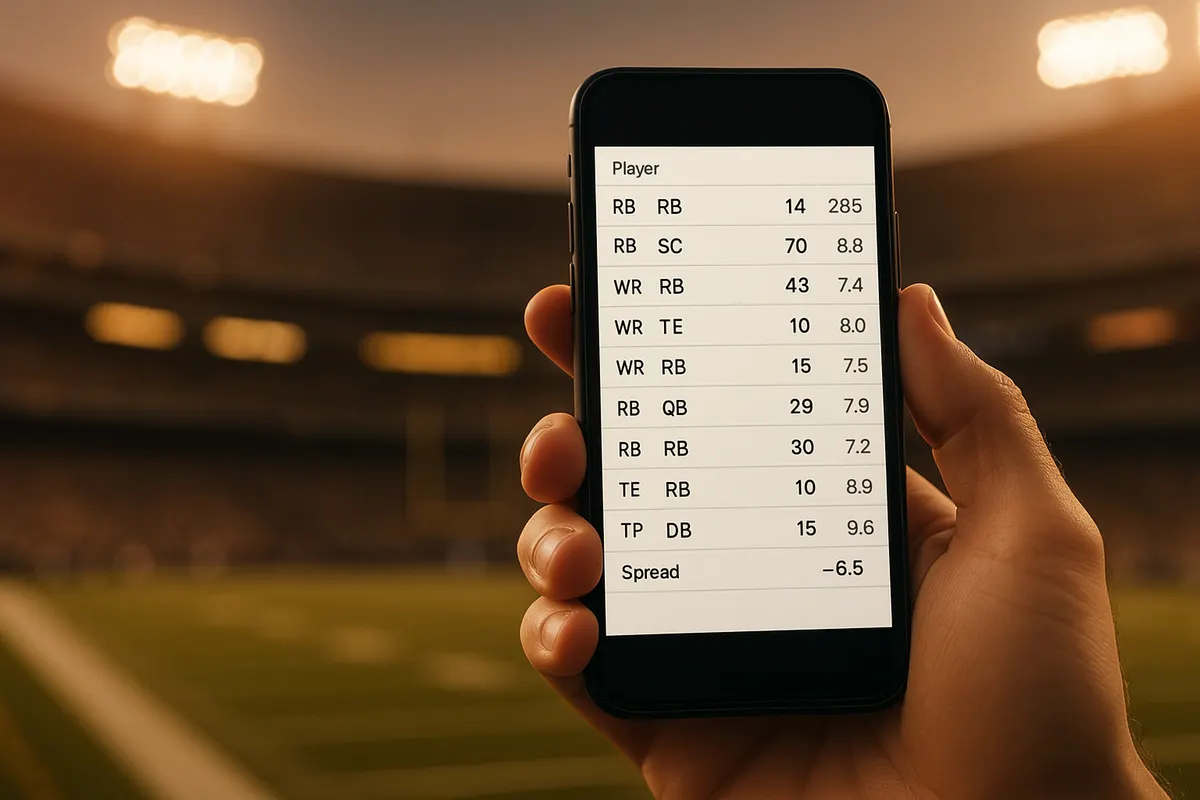
One o’clock kickoffs, three games on the screen, and a phone propped against the salt shaker. You’ve got a more-or-less slip running on four receivers, and in a separate tab you’re watching the spread in the game that half those receivers are playing in. Two screens, two accounts, two sets of mental math. That split-screen habit is the thing PrizePicks has gone after with its latest update.
PrizePicks has rolled out a set of app features built around the football season, and the headline change is combo entries: PrizePicks multi athlete picks can now sit in the same lineup as predictions on game results. In plain terms, one slip can hold stat projections for several players alongside game winners, point spreads and totals. You can also stack several game outcomes inside a single entry.
“We’ve been heads-down building new ways to make the PrizePicks platform even more engaging,” said Dylan Cooper, the company’s SVP of Product, framing the update as part of a continuous build rather than an annual refresh.
What actually changed
Until now, the pick’em model had a single currency: the over/under on an individual athlete’s projected stat line. Rushing yards, receptions, passing touchdowns. You picked more or less, you needed every leg to land, and that was the format.
The update adds a second type of leg to the same lineup. Three things are genuinely new:
- Mixed lineups. For the first time you can combine more-or-less picks on multiple athletes with game winners, spreads and totals in one entry.
- Multi game entries. Several game outcomes can go into the same slip, rather than one result per entry.
- Live data in-app. Real-time updates, box scores and a play-by-play feed, so lineup tracking no longer means flipping to a scores app.
Alongside that, PrizePicks says it will lean harder on its Reboot policy through the football season. More on that below, because it changes how much injury risk you’re actually carrying.
Building your first combo entry, step by step
The mechanics are not complicated, but the order you work in matters more than most people expect. Here’s the sequence I’d use.
- Pick your game first, not your players. If you’re going to mix formats, start with the matchup you have an actual opinion on. A view like “this game stays low-scoring” gives you a frame that both your game leg and your player legs can live inside.
- Add the game-outcome leg. Winner, spread or total. This is the anchor and the leg you should be least willing to change later.
- Layer in athlete projections that agree with your anchor. If your anchor is an under on the total, chasing three receiving overs in that same game is working against yourself. Consistency beats volume.
- Check the overlap deliberately. Two legs that depend on the same play are not two independent chances. Sometimes that’s exactly what you want. Sometimes it means one bad snap kills your whole slip.
- Decide your leg count last. Add legs because the lineup still makes sense, not because a bigger payout multiplier appeared. This is where most entries go wrong.
- Read the entry type and the settlement rules before you submit. How a voided or DNP leg is handled varies by entry type and by the sportsbook or DFS operator you’re using. Know it in advance, not at 4pm.
The math behind every extra leg
This is the part worth sitting with. Pick’em entries that require every leg to land get exponentially harder as you add legs. Treat each leg as a clean coin flip and the arithmetic is brutal and easy to verify:
| Legs in the entry | Chance all land (if each leg is a true 50/50) |
|---|---|
| 2 | 25% |
| 3 | 12.5% |
| 4 | 6.25% |
| 5 | 3.125% |
| 6 | 1.5625% |
Real legs aren’t exactly 50/50, and correlated legs don’t multiply out this cleanly. But the shape of the curve holds: each addition roughly halves your hit rate. The payout multiplier grows too, which is the point, and the operator’s margin lives in the gap between the fair price for that parlay-style combination and the payout actually offered. That gap is the house edge in this format, and it compounds with every leg just like the probability does. Longer slips are more fun and mathematically worse. Both things are true.
Correlation is the real skill in multi-game entries
Mixed lineups introduce something the pure player-props format mostly didn’t have: legs that are mechanically linked.
Positive correlation is when legs rise and fall together. A team total over and that team’s quarterback going over on passing yards tend to travel in the same direction. If your read is right, both land; if it’s wrong, both die. You’ve concentrated your risk, which raises variance without necessarily raising your expected value.
Negative correlation is the quieter trap. Taking an under on a game total while also taking three skill-position overs in that same game is an entry arguing with itself. You can still win it, but you’ve stacked the odds against your own slip.
The useful habit: for every leg you add, say out loud what has to happen on the field. If two legs need contradictory game scripts, cut one.
Reboot, and what it does not cover
Under Reboot, an athlete who is injured in the first half and does not return is marked DNP, which keeps the rest of your lineup alive instead of voiding the whole thing. PrizePicks says it will amplify this policy across the football season.
That’s a real improvement in a sport where one awkward tackle used to end your Sunday before the second quarter. But read the boundary carefully: it’s a first-half injury that the player doesn’t come back from. A player who limps through three quarters at 40% capacity and finishes well under projection isn’t covered by anything. Neither is a healthy player who simply gets eight touches in a blowout. Reboot handles a specific, narrow failure mode, not general bust risk.
Live tracking changes how you watch, not how you win
Real-time updates, box scores and a play-by-play feed inside the app mean you can follow every leg without switching screens. It’s a genuine convenience, and it’s also the feature most likely to affect your behaviour rather than your results.
Watching a lineup die in real time is the single most common trigger for an unplanned second entry. The sensible move is to decide your total stake for the day before kickoff and treat the live feed as a scoreboard, not a prompt. Set a deposit or session limit if you know that’s a weak spot for you, and stop when you hit it. These formats are entertainment with a built-in operator margin, not a source of income, and no amount of live data changes that.
What this means for fantasy betting formats generally
The direction of travel here is obvious: pick’em products are absorbing the feature set of traditional sportsbooks. Spreads, totals and moneylines alongside player projections in one slip is, functionally, a parlay builder with a daily fantasy sports wrapper. That makes the product more flexible and more familiar to anyone who has used a sportsbook app.
It also means availability matters. Pick’em style daily fantasy has drawn regulatory attention in several US states, and which play types are offered where can differ. Before you plan a strategy around combo entries, confirm what’s actually live in your location and what the entry rules say. Two players in two states can be looking at two different menus.
If you take one thing from the new PrizePicks features, make it this: the extra formats give you more ways to express a specific opinion about a game. They don’t give you more ways to be right. Build the lineup around the read you actually have, keep the leg count honest, and let the play-by-play feed be the reward rather than the trigger.
FAQ
What are PrizePicks multi-athlete picks?
They’re entries that combine more-or-less projections for several different athletes in one lineup. With the latest update, those athlete legs can also sit alongside game-level predictions such as winners, spreads and totals.
Can I put more than one game result in a single entry?
Yes. The update allows several game outcomes to be selected within one entry, rather than restricting an entry to a single game result.
Does adding more legs improve my chances?
No. It raises the potential payout multiplier and lowers your probability of hitting the whole slip. If each leg were a true coin flip, six legs would land together about 1.6% of the time.
What happens if one of my players gets hurt?
Under PrizePicks Reboot, an athlete injured in the first half who doesn’t return is marked DNP and the remaining legs stay live. It doesn’t cover players who stay in the game and underperform.
Fantasy and betting products are for adults of legal age in jurisdictions where they’re permitted. Play with money you can afford to lose, use the deposit, loss and session limits your operator provides, and seek support if gambling stops feeling like entertainment.