

No, a 40,000-person trade show is not just an industry party
The lazy take on any big gambling industry conference is that it’s lanyards, espresso and expense accounts. SBC Summit Lisbon 2026, which opened on Tuesday 29 September and runs through 1 October, will absolutely have all three. But the deals signed in those halls decide which slots appear in your lobby next spring, which payment method gets added at checkout, and how aggressively your account gets nudged toward deposit limits. Players feel the output of these three days long after the badges go in the bin.
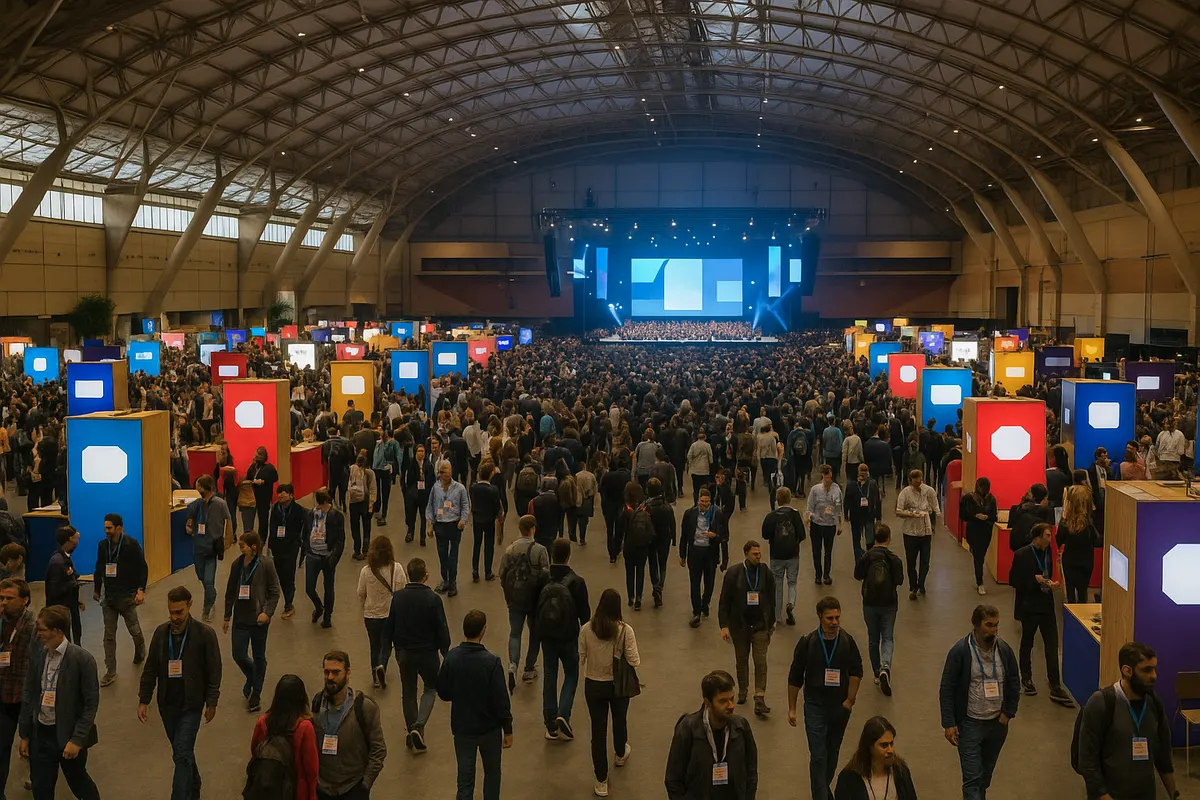
This year the scale is the story. Organizers expect more than 40,000 betting and iGaming professionals at Feira Internacional de Lisboa (FIL) and MEO Arena, the biggest edition of the event so far and the third consecutive year it has been staged in the Portuguese capital. The interesting question isn’t whether that number is impressive. It’s what a record turnout actually proves.
SBC Summit Lisbon 2026 by the numbers
Here’s the official shape of the event, according to the organizers’ pre-show figures:
| Metric | 2026 edition |
|---|---|
| Expected delegates | More than 40,000 |
| Exhibitors and sponsors | More than 800 |
| Speakers | More than 600 |
| Countries represented | More than 150 |
| Operators confirmed | More than 11,000 |
| Dates | 29 September – 1 October |
| Venues | FIL and MEO Arena, Lisbon |
That operator figure is the one worth staring at. Roughly a quarter of the expected SBC Summit delegates are on the operator side, which means three quarters are suppliers, regulators, lotteries, affiliates, technology firms and the long tail of service businesses that have attached themselves to betting over the past decade. The Lisbon betting summit has grown, but it has grown mostly around the operators rather than because operators multiplied.
Three ways to read a record turnout
Attendance records invite easy conclusions. There are really three competing explanations, and they lead to very different forecasts for iGaming trends over the next year or two.
Reading one: the sector is simply booming
The straightforward interpretation. More regulated markets have opened, more people bet on their phones, and a growing business sends more staff to the show where its customers are. If you believe this, 40,000 delegates is a demand signal and the natural expectation is more product, more marketing spend and more new brands.
The weakness: conference attendance measures commercial activity, not player numbers or profitability. A crowded hall tells you a lot of companies want to sell something. It doesn’t tell you they’re all selling it successfully.
Reading two: the supplier layer has exploded, not the operator layer
This explanation fits the numbers better. Over 800 exhibitors and sponsors chasing roughly 11,000 operator attendees is a crowded sales floor. Game studios, platform providers, payment processors, data feeds, KYC and verification vendors, affiliate networks, compliance consultancies, customer-support outsourcers: each has become its own sub-industry with its own sales team.
If this reading is right, expect consolidation pressure. When that many vendors compete for the same operator budgets, the mid-sized ones get bought or squeezed out, and the surviving platforms bundle more services into one contract.
Reading three: regulation is pulling everyone into the same room
The least glamorous explanation and probably the most underrated. Regulators, lotteries and state monopolies now attend in meaningful numbers. Licensing in a dozen jurisdictions, each with its own advertising rules, affordability checks, data-reporting duties and tax regime, is expensive and specialised work. The 150-plus countries represented aren’t 150 open markets; many send people precisely because the rules are unsettled.
Under this reading, a record gathering is partly a compliance phenomenon. The cost of staying legal across borders has become large enough to support its own professional class, and that class travels.
The verdict
All three are true, but in unequal measure. The honest read of SBC Summit Lisbon 2026 is a maturing sector with a fast-growing service economy bolted on and rising regulatory overhead, rather than a straightforward boom in betting itself. Mature industries hold enormous conferences. They also consolidate, and the quiet subtext of 800 exhibitors is that not all of them will be exhibiting in three years.
Michael Jordan on the Super Stage says something too
The opening day’s centrepiece is the Super Stage at MEO Arena, where Michael Jordan appears alongside Sportradar founder and CEO Carsten Koerl and DraftKings co-founder, CEO and chairman Jason Robins. The session, “Leadership in Sports Business,” runs from 12:00 to 13:00 and is moderated by broadcaster and journalist Kirsty Gallacher. The Super Stage has been one of the summit’s headline features since it launched in 2024.
Booking an athlete of Jordan’s stature next to a data supplier and a sportsbook operator is a statement about where the money sits. Sport, sports data and sports betting are now one commercial chain, and the data business in the middle is where much of the value has quietly accumulated. Whoever owns the feed owns the in-play market.
What you will actually notice as a player
Conference announcements take months to reach your account. These are the themes that tend to travel from a trade floor to a casino lobby:
- More live and game-show formats. Studio-based content has been the industry’s favourite growth story, and stand space usually follows.
- Faster, more local payments. Payment vendors are among the biggest exhibitor categories, which generally means more deposit options and quicker cashouts, assuming your KYC is clean.
- Tighter verification. Identity and affordability checks are a compliance product now. Expect more document requests, earlier in the process.
- Visible responsible gambling tooling. Deposit, loss and session limits, cool-off periods and reality checks are increasingly sold as standard platform features rather than optional extras.
None of this changes the arithmetic of the games themselves. A record-breaking gambling industry conference doesn’t move RTP, shrink the house edge or make a slot less volatile. A 96% RTP game still carries a 4% house edge over the long run, however impressive the booth that launched it. Set your own limits, treat gambling as paid entertainment rather than income, and use the self-exclusion and cool-off tools your operator is now obliged to offer.
If you want one number to carry away from Lisbon, make it the ratio: 800 exhibitors, 11,000 operators. That gap is where the next wave of mergers, shutdowns and surprise product launches is going to come from.